
Seven Simple Somatic Practices to Calm Your Nervous System Every Day
By Dimple Mehta
We often wait until we're overwhelmed before we try to calm down. By then, it's much harder. Somatic practices work best as small, regular habits. Think of them like brushing your teeth for your nervous system: a few minutes, most days, adding up over time.Here are seven gentle practices inspired by somatic approaches, including Somatic Experiencing.None need special equipment. Most take less than five minutes.
1.Orienting: let your eyes tell your body it's safe
Slowly turn your head and let your eyes wander around the space you're in. Let them rest on whatever draws them — a colour, a shape, the sky outside.
This simple act signals to the oldest parts of your brain that there's no immediate danger. Manypeople notice a spontaneous deep breath or yawn.
When to use it: first thing in the morning, or when you walk into a new or tense space.
2.Grounding through your feet
Stand or sit with your feet flat on the floor. Press down gently and notice the ground supporting you. Shift your weight slowly from one foot to the other.
Feeling contact and support helps bring scattered energy back into the body.
When to use it: before a difficult conversation or when your mind is racing.
3.The self-hold
Place one hand on your forehead and the other on your chest. Rest there, breathing naturally, until you feel even a small shift. Then move the top hand to your belly and stay a little longer.This kind of gentle self-contact is used in somatic work to help the body feel held and contained.
When to use it: at bedtime, or when you feel emotionally flooded.
4.The "voo" breath
Take a comfortable breath in. As you breathe out, make a low, long "voooo" sound, like a foghorn, feeling the vibration in your belly. Rest, then repeat two or three times.The long exhale and the vibration can help settle an activated system.
When to use it: when anxiety is building, or after a stressful drive or meeting.
5.Shake it out
Remember the animals that tremble after a threat and then move on? You can borrow their wisdom. Gently shake your hands, then your arms, then your legs. Let it be loose and a little silly.
When to use it: after a stressful event, or as a fun family reset with children.
6.Find the "okay" place
Scan your body slowly. Look for one area that feels neutral, comfortable or even pleasant — maybe your earlobes, your hands or the back of your knees. Rest your attention there for a few breaths.This trains the nervous system to notice safety, not only threat.
When to use it: when pain or discomfort is taking up all your attention.
7.Savour a good moment
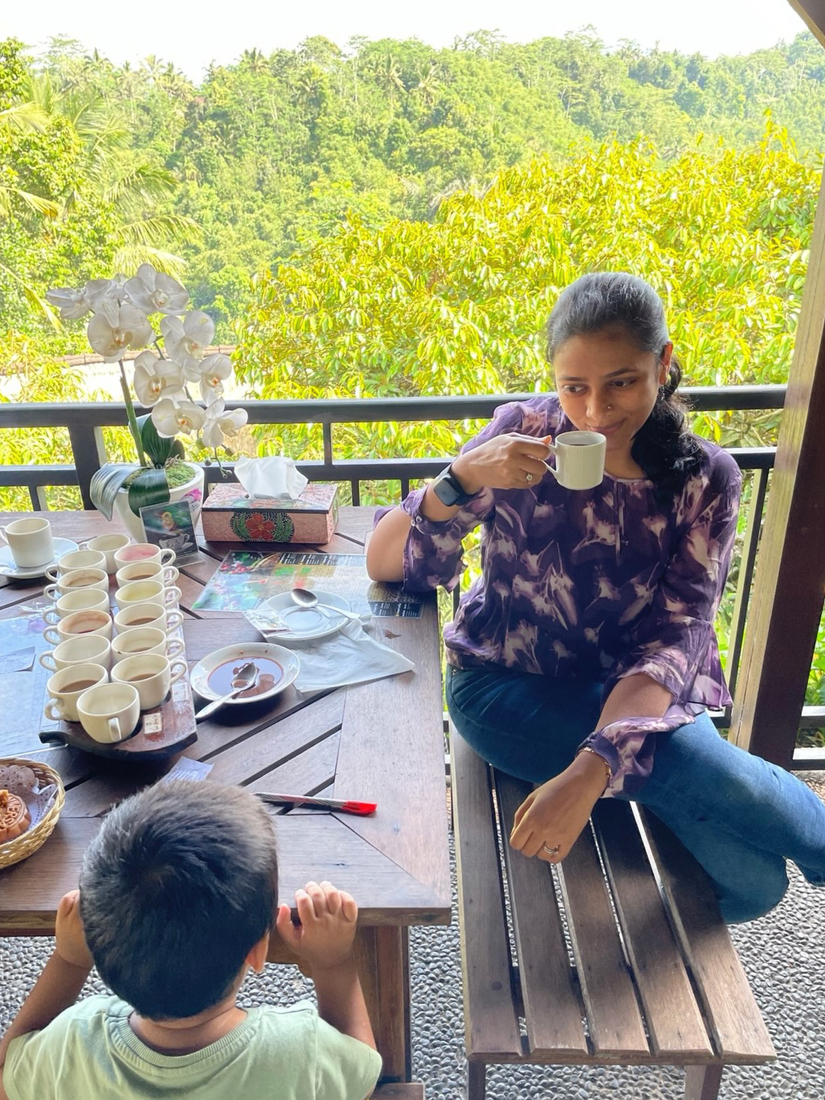
When something feels good — sunlight on your skin, your child's laugh, the first sip of chai —pause for fifteen seconds. Notice where in your body you feel the pleasure.Our brains are wired to hold on to danger. Savouring helps us hold on to goodness too.
When to use it: any time, as often as you can.
A few gentle guidelines
- Go slowly. Less is often more with the nervous system.
- If a practice brings up distress, stop, open your eyes and orient to the room.
- There's no "right" way to feel. Simply notice what happens.
- These practices support wellbeing. They are not a substitute for medical or mental health care.
Want to go deeper?
In my somatic-first coaching, we build a set of practices tailored to your body, your life and your patterns. If you'd like support, write to me at info@ourquest.in or WhatsApp +91 98842 00475.Learn more at www.ourquest.in.
— Dimple Mehta, Compassionate Inquiry Practitioner, Our Quest Coaching Services
 dimple. ourquest